Advanced Practice Nursing in Spain

Role

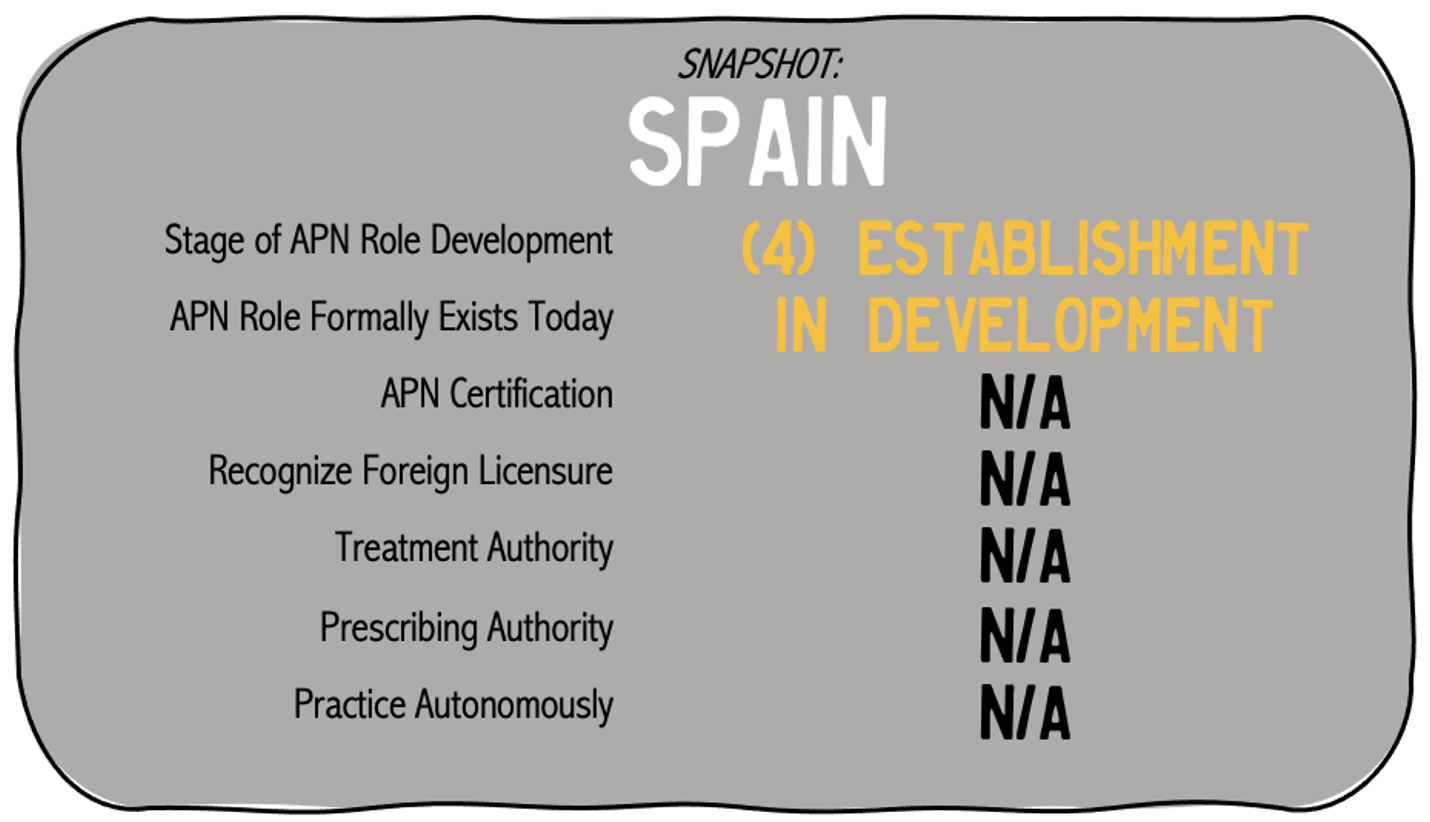
In Spain, there has been an ongoing increase in both interest and practice of Advanced Practice Nurses (APNs, Cantón-Rodríguez, 2024; Sevilla Guerrera, 2018).  This includes significant collaborative efforts among healthcare institutions, universities, publication of evidence to support and understand the current and prospective role, and regional support (Cantón-Rodríguez et al., 2024).  The role however has been met with significant challenges that has prevented national consistency in the role’s implementation, including lack of legislative support, institutional role development, and peer support (Cantón-Rodríguez et al., 2024; Hämel et al., 2020; Sánchez-Gómez et al., 2019).

Education

Nursing currently requires a bachelor’s degree in nursing consistent with EU standards for the same role.  As the APN role is not formally acknowledged on a national level, consensus supports both the EU standard as well as ICN definition in that any APN role would require a Masters degree in Nursing (Sánchez-Gómez et al., 2019).

Specialties

With the lack of generalized APN role, there is not any formal nationally recognized specializations for APNs in Spain.  However, various roles have been created to promote components of a more advanced role for nurses which would meet the ICN’s definition of a Master’s Degree prepared APN for at least the last seven years (Cantón-Rodríguez et al., 2024; Sánchez-Gómez et al., 2019). Historically, Spain has incorporated APNs in specialized roles in various capacities throughout Spain including urgent care, primarily focusing on chronic disease, incorporating diabetology, stomatherapy, oncology, palliative care, chronic wounds, and case management (Cantón-Rodríguez et al., 2024).

References:

Cantón-Rodríguez, Y., Ibáñez-Masero, O., García-Navarro, E.B., Ortega Galán, Á.M., Ventura-Miranda, M.I., & Ruiz-Fernández, M.D. (2024). Professional experiences of Spanish advanced practice nurses: qualitative research.  BMC Nursing, 23(439). doi:10.1186/s12912-024-02105-6

Hämel, K., Rosana, B., Casanova, A., & Giovanella, L. (2020). Advanced practice nursing in primary health care in the Spanish national health system.  Ciência & Saúde Coletiva, 25(1)303-314. doi:10.1590/1413-81232020251.28332019

Sánchez-Gómez, M.B., Ramos-Santana, S., Gómez-Salgado, J., Sánchez-Nicolás, F., Moreno-Garriga, C., & Duarte-Clíments, G. (2019). Benefits of advanced practice nursing for its expansión in the Spanish context.  International Journal of Environmental Research and Public Health. 16(680). doi:10.3390/ijerph1605680

Sevilla Guerra, S. (2018). The implementation of advanced practice nursing in Catalonia.  [Doctoral dissertation, University of Barcelona] Retrieved from: https://www.tesisenred.net/bitstream/handle/10803/585925/SSG_PhD_THESIS.pdf?sequence=1&isAllowed=y


Advanced Practice Nursing in Belgium

Contact:
Belgische Vereniging Verpleegkundig Specialisten BVVS (Belgian Association of Nurse Practitioners)

Role

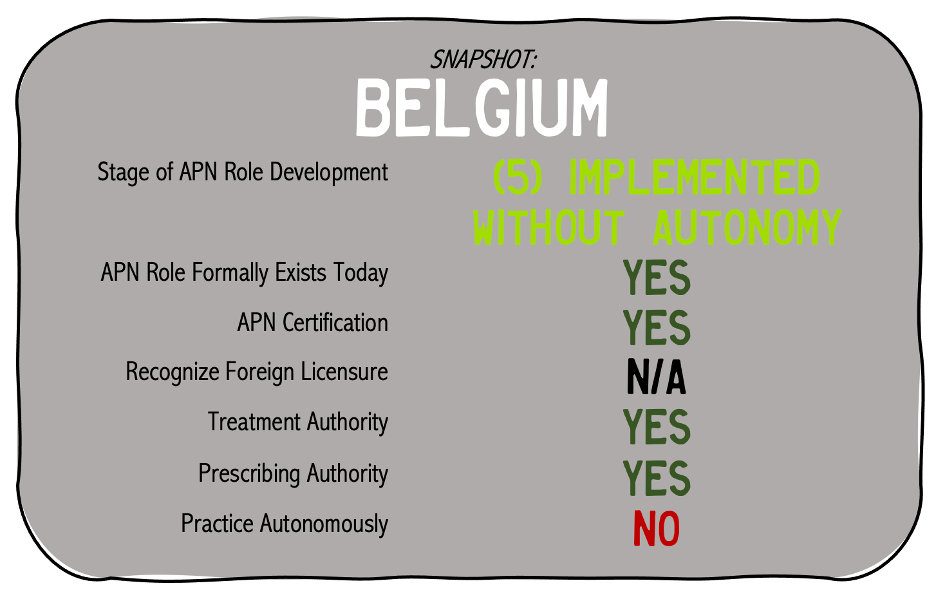
Belgium has made significant advances in developing the Advanced Practice Nurse (APN) role over the last ten years.  In 2019 legislation was ratified to nationally protect the term APN under the titles Verpleegkundig Specialist [VS] in the Flemish region and Infirmier de pratique avancée [IPA] in the French region or often labeled together VS/IPA (Van Hecke et al., 2022).

Since then, clarification of the role of VS/IPA was ratified in legislature through Royal Decree on April 14, 2024 which identified prescribing and treatment authority for APNs (Arrêté royal du 14 avril 2024, 2024).  After the Royal Decree in 2024, a delayed rollout of VA/IPA prescribing was set in place for January 1, 2026 to allow for healthcare institutions and insurances to identify the formulary and procedures for APNs to prescribe (Blondeel et al., 2025).

In Belgium, APNs cannot practice autonomously and are dependent on interprofessional collaborative agreements based on physician directed permissions that vary based on position (Blondeel et al., 2025).  However, there has been significant interest and momentum to help establish more standardized competencies for APNs in Belgium that have included multidisciplinary key-stakeholders to help further discussions of autonomy in the future (Van Hecke et al., 2024).

Education

In order to use the title of VS/IPA, one must have both a Bachelor Degree and Masters Degree in Nursing with specific education in Advanced Practice Nursing (Blondeel et al., 2025; Van Hecke et al., 2022).   This is consistent with other nations within the European Union to keep a level of continuity between APN education and as such requires the educational level equivalent of EQF-7 to prescribe medications (Blondeel et al., 2025).   Such programs are available at universities in Belgium as the University of Antwerp (n.d.), of the Université Libre de Bruxelles (n.d.).

Have information to add to this page?

References:
Arrêté royal du 14 avril 2024 (2024). URL https://www.ejustice.just.fgov.be/cgi_loi/article.pl?language=fr&lg_txt=f&type=&sort=&numac_search=&cn_search=2024041414&caller=eli&&view_numac=2024041414nl

Blondeel, M., Mortelmans, L., De Belder, E., Sabbe, K., Goosseens, E., Dilles, T. (2025).  Exploring nurse prescribing practices and preferences in Belgian hospitals: a multicentre cross-sectional survey on healthcare providers’ perspectives and expected impact.  Journal of Advanced Nursing, 2025(11). doi:10.1111/JAN/.70068

Université Libre de Bruxelles. (n.d.). Master in advanced practice nursing. Retrieved September 18, 2026, from https://www.ulb.be/en/programme/ma-sipa

University of Antwerp (n.d.). Advanced Nurse Practitioner: Master of nursing and midwivery.  Retrieved September 18, 2026 from: https://www.uantwerpen.be/en/study/programmes/all-programmes/master-nursing-midwifery/study-programme/advanced-nurse-pract/

Van Hecke, A., Van Bogaert, P., Decoene, E., Dobbles, F., Goossens, E., Goossens G.A., Verhaeghe, S., & Goffin, T. (2022).  A legal framework on advanced practice nursing in Belgium: what do we and don’t we know?  Acta Clinica Belgica. 77(1). doi:10.1080/17843286.2020.1795575

A. Dancot, J., Dobbels, F., Alice Goossens, G., Jacobs, N., Van Achterberg, T., Van Bogaert, P., Van Durme, T., Verhaeghe, S., Vlaeyen, E., & Goossens, E. (2024). Development of a competency framework for advanced practice nurses: a co-design process.  Journal of Advanced Nursing, 2024(00)1-13. doi:10.1111/jan.16174

Originally Published 7 August, 2013; Updated 21 September 2026

Advanced Practice Nursing in Brazil

Contact:
Cofen

Role

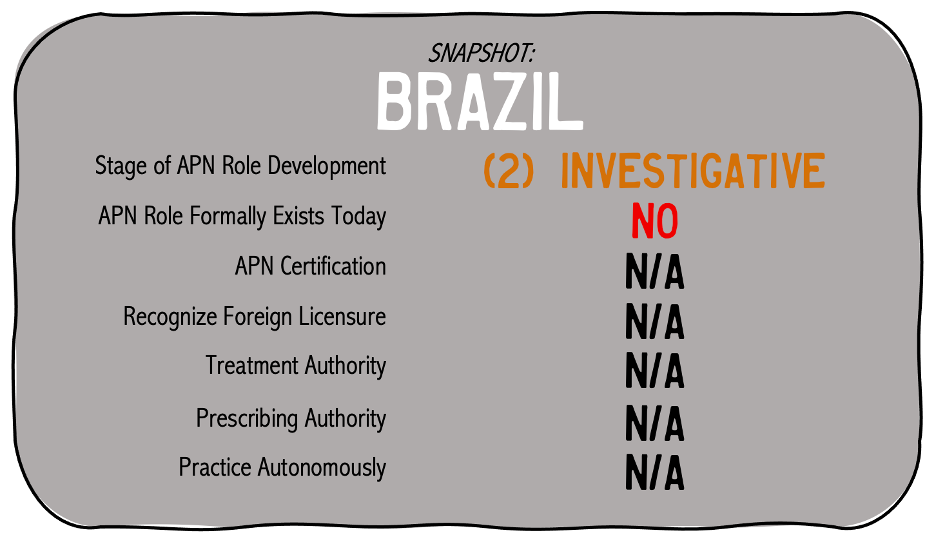
The role of Advanced Practice Nursing in Brazil does not currently exist. However, as of 2022 Cofen, the regulating organization for nurses in Brazil has been actively interested and investigating the potential and feasibility of developing a more advanced role for nursing. According to Alves de Araújo Puschel et al (2022) there are significant health disparities in Brazil and an organized nursing workforce that would be a good foundation to develop the role. During the COVID pandemic, collaborative efforts were made with other nations that strengthened the interest to proceed with advancing nursing practice. However, reportedly with the combination of strengthening of the physician’s role, presence of nursing workforce shortages, and lack of legislative movement on nursing has shown further momentum would be needed before such a role were to take shape (Alves de Araújo Puschel, 2022).

Have information to add to this page?

References:
Alves de Araújo Puschel, V., Pimenta Araújo Paz, E., Martins Ribeiro, R., Maria Alvarez, A., / Leonardo Figueiredo Cunha, C. (2022). Advanced practice nursing in Brazil: How are we and what is missing?. Reverts de Escola de Enfermagem da U F P. 18(56). doi:10.1590/1980-220X-REEUSP-2021-0455en

Advanced Practice Nursing in the Netherlands

Screen Shot 2022-07-01 at 10.57.49 AM

Contact:
Dutch Ministry of Health
Dutch Nursing Specialist Register
Dutch Professional Nurse Practitioner Organization

Role

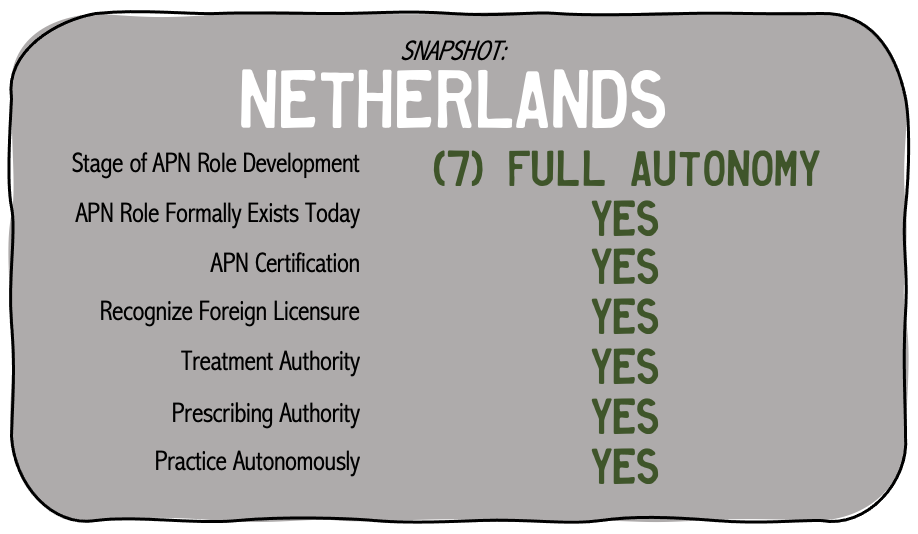
The role of Advanced Practice Nurses in the Netherlands is the Nurse Practitioner or “Verpleegkundig (VSR, 2022).  Introduction of this role started in 1997 (Storedur & Leonard, 2010; Van den Brink et al., 2019).  The Clinical Nurse Specialist role in the Netherlands had initially developed as an alternative health provider for general practice physicians based on a general practitioner shortage (Dierick-van Daele, 2010; Stordeur & Leonard, 2010; Zwijnenberg & Bours 2012).  Progressively, the role expanded as the health system responded with generalized acceptance and improvement of cost efficiency and outcomes (Maier, 2019; Van den Brink, 2019; VSR, 2019).  The scope of practice for Dutch Nurse Practitioners primarily includes:

  • Advanced assessment (Dierick-van Daele, 2010)
  • Diagnosing and making decisions for further treatment (Dierick-van Daele, 2010)
  • Full Prescriptive authority within specialization (Maier, 2019)
  • Provision of procedures necessary for medication treatment (Zwinjenberg & Bours, 2012)
  • Referrals to primary or secondary services (Dierick-van Daele, 2010)
  • Autonomous practice without physician supervision (Van den Brink et al., 2019)

As the role has progressively developed, Van den Brink et al. (2019) identified the practice of care in hospital settings and identified

Since the introduction of the Nurse Practitioner role in the Netherlands, studies began showing that the role significantly addressed areas of patient care that were not previously adequately addressed by their physician staff (Stordeur & Leonard, 2010).  While the role is not intended to replace that of physicians, it has been greatly observed as a complimentary role and is pursuing more autonomous roles for Nurse Practitioners to perform patient care in patients homes and management of chronic illnesses (Storeur & Leonard, 2010; Maier, 2019).

Education and Certification

A four-year bachelor degree is necessary to work as a registered nurse in the Netherlands (Robinson & Griffiths, 2007).  The advancement of nursing practice to become a Certified Nurse Specialist requires an individual to receive a 2-year dual Master of Advanced Nursing Practice (MANP) degree (Dierick-van Daele, 2010; Stordeur & Leonard, 2010; VSR 2022).  In the event an advanced practice nurse would like to practice in the Netherlands, there are several nations of the EU including Switzerland, Iceland, Norway, or Lichtensetin in which registration is transferrable (VSR, 2022).  If an individual received their APN training outside of these nations, they will need to first complete the MANP degree, however individuals may qualify for a shortened trajectory based on their previous training (VSR, 2022).

The Dutch have been very proactive in developing a model to facilitate this role development, including having their APN students experience through immersion the Nurse Practitioner role outside their country (Ter Maten & Garcia-Maas, 2010).   Registration for Advanced Practice Nurses in the Netherlands requires individuals to register under a separate registry (the Verpleegugkundig Specialist Register [VSR]) from that of registered nurses, maintained by a division of the Central Information Centre for Professional Practitioners, an branch under the Ministry of Health, Welfare, and Sport (Robinson & Griffiths, 2007; VSR, 2017).

Specialties

Based on the needs of the Dutch health system, there two main specializations: general (or somatic) health and mental health as follows (VSR, 2017).  A link to the Professional Competency Framework can be found here.

The curriculum for further specialization (i.e. cardiology, primary care) is then incorporated within the specific graduate coursework of one of the above specialties (VSR, 2017).

Have information to add to this page?

References:
Delamaire, M. & Lafortune, G. (2010). Nurses in advanced roles: A description and evaluation of experiences in 12 developed countries.  OECD Health Working Papers, 54, OECD Publishing.http://dx.doi.org/10.1787/5kmbrcfms5g7-en

Dierick-van Daele, A. (2010).  The Introduction of the Nurse Practitioner in General Practice [electronic publication].  Schering-Plough.  Retrieved from: http://arno.unimaas.nl/show.cgi?fid=20140

Maier, M.B. (2019). Nurse prescribing of medicines in 13 European countries.  Human Resources for Health. 95(2019), doi:10.1186/s12960-019-0429-6

Pulcini, J., Jelic, M., Gul, R, Loke, A.Y. (2009).  An international survey on advanced practice nursing, education, practice, and regulation.  Journal of Nursing Scholarship, 42(1),31-39.  doi: 10.1111/j.1547-5069.2009.01322.x

Robinson, S. & Griffiths, P. (2007).  Nursing education and regulation: International profiles and perspectives [online publication].  Retrieved from:http://eprints.soton.ac.uk/348772/1/NurseEduProfiles.pdf

Sheer, B. & Wong, F.K. (2008).  The development of advanced nursing practice globally.  Journal of Nursing Scholarship, 40(3),204-211.

Stordeur, S. & Leonard, C. (2010).  Challenges in physician supply planning: The case of Belgium.  Human Resources for Health, 8(28),1-11.  doi:10.1186/1478-4491-8-28

Ter Maten, A. & Garcia-Maas, L. (2010).  Dutch advanced nursing practice students: Role development through international short-term immersion.  Journal of Nursing Education, 48(4), 226-231.

Van den Brink, G.T.W.J., Kouwen, A.J., Hooker, R.S., Vermeulen, H. & Laurant, M.G.H. (2019). An activity analysis of Dutch hospital-based physician assistants and nurse practitioners.  Human Resources for Health.  78(2019).  doi:10.1186/s12960-019-0423-z

Verpleegkundig Specialisten Register [VSR] (2017). More information (in English) about the profession of the certified nurse specialist: The nurse practitioner in the Netherlands.  Retrieved from: https://www.venvn.nl/media/zvofiilk/additional-information-about-the-certified-nurse-specialist.pdf  

Verpleegkundig Specialist Register [VSR] (2022). Foreign graduates: The nurse practitioner in the Netherlands [webpage]. Retrieved June 28, 2022 from: https://www-venvn-nl.translate.goog/registers/verpleegkundig-specialisten-register/registratie/buitenslands-gediplomeerden/?_x_tr_sl=auto&_x_tr_tl=en&_x_tr_hl=en&_x_tr_pto=wapp

Zwijnenberg, N.C. & Bours, G.J. (2012).  Nurse practitioners and physician assistants in Dutch hospitals: their role, extent of substitution and facilitators and barriers experienced in the reallocation of tasks.  Journal of  Advanced Nursing, 68(6),1235-1246.  doi: 10.1111/j.1365-2648.2011.05823.x

[Initially published 16 Aug 2013; revised 1 Jul 2022, revised 9 Jun 2024]

Advanced Practice Nursing in Austria

Screen Shot 2022-07-24 at 2.43.50 PM

Role

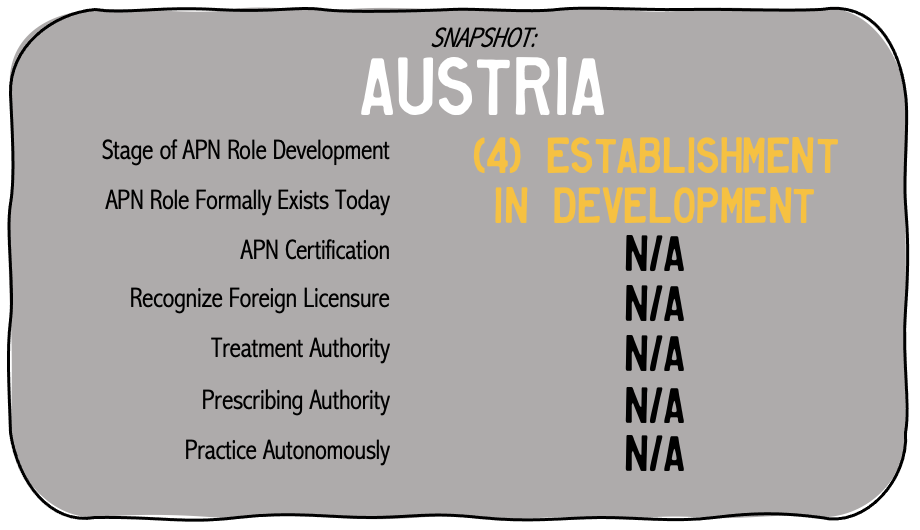
Austria as well as many other nations worldwide is planning for the future sustainability of its health system with an aging health workforce (Glarcher & Lex, 2020).  There has been significant recent momentum in Austria to develop the role of advanced practice nursing (APN) since 2016 when educational regulation for the registered nurse role was formally embraced.  Since 2016 various academic programs recently have developed APN curriculum for masters-level degrees and graduates have begun to enter the workforce (Glarcher & Lex, 2020).

However, at this time the role is largely limited to the lack of any formal regulation.  As a result the scope of practice exists only as determined by each organization and consequentially does not have advanced permissions for advanced practice by national entities for independent assessment, diagnosis, treatment, and prescription beyond the registered nurse role (Glarcher & Lex, 2020).

References:
Glarcher, M. & Lex, K.M. (2020).  Advanced nursing practice in Austria under consideration of outcome measurement. Zeitschrift für Evidenz, Fortbildung und Qualität im Gesundheitswesen. 155(2020)11-16. doi: 10.1016/j.zefq.2020.06.012

Advanced Practice Nursing in Kenya

Contact:
Aga Khan University – School of Nursing and Midwifery, East Africa
Kenyan Nurses Association

Role

The role of the Advanced Practice Nurse in Kenya is in development(Rasul, 2020; Sahib et al., 2020).  They role has yet to be developed and has met significant pushback in the past to attempt to advance nursing practice (East et al, 2014).  

Some of the greatest barriers identified include: lack of advanced nursing role regulation, lack of regional benchmark, medical profession (Dela Christmals, Crous, & Armstrong, 2019; East et al, 2014).  Meanwhile, significant healthcare gaps, particularly throughout rural parts of Kenya along with nurses making up the majority of Sub-Saharan Africa (SSA) drives the advancement of nursing practice to promote Kenya’s health disparities (Dela Christmals, Crous, & Armstrong, 2019).  

While the role has not been yet developed, Kenya has made significant strides to facilitate the process to advance nursing practice.   In November 2020, the Aga Khan University in Pakistan, hosted a conference to promote the role of the Advanced Practice Nurse in Pakistan and West Africa, and during that conference Rasul (2020, November) reported expanded masters level education programs for Advanced Practice Nurses in Kenya and reported a midwifery program would be developed by 2021.  

Most recently, the Aga Khan University posted on May 6, 2022 that the Kenyan government approved the nursing and midwifery policy facilitated by the AKU demonstrating the imminent implementation of a formal APN role in Kenya and SSA.

Specialization

Meanwhile, Kirigia (2020) presented that the Child Health Nurse Practitioner curriculum has been nearly implemented.  This would establish the first formal initiative to provide quality graduate-level education advanced nursing practice role in the country and SSA.  The focus of the CHNP focus was determined by the majority population of SSA and being regarded as the most vulnerable to disease burden (Dela Christmals, Crous, & Armstrong, 2019).

Have information to add to this page?

References:
Aga Khan University. (May 6, 2022). Government approves nursing and midwifery policy conveniened by AKU.  Retrieved July 9, 2022 from: https://www.aku.edu/news/Pages/News_Details.aspx?nid=NEWS-002763

Dela Christmals, C. & Armstrong, S.J. (2019). The essence, opportunities and threats to advanced practice nursing in Sub-Saharan Africa: A scoping review. Heliyon. 5(2019). doi:10.1016/j.heliyon.2019.e02531

Dela Christmals, C., Crous, L., & Armstrong, S.J. (2019). The development of concepts for a concept-based advanced practice nursing (Child health nurse practitioner) curriculum for Sub-Saharan Africa. International Journal of Caring Sciences. 12(3)1410. doi:10.1136/bmjopen-2019-035580

East, L.A., Arudo, J., Loefler, M., & Evans, C. (2014). Exploring the potential for advanced nursing practice role development in Kenya: A qualitative study. BMC Nursing. 13(33). doi:10.1186/s12912-014-0033-y

Kirigia, C. (2020). Impact of advanced practice nurses and midwives on patients’ outcomes: A systematic review. International Journal of Health Sciences and Research. 10(6). doi:10.6084/m9.figshare.1246230.v1

Rasul, F. (2020, November). President’s Address. Shaping the future: Introducing advanced practice nursing in Pakistan and East Africa.  Aga Khan University, Pakistan.  Retrieved May 22, 2022 from: https://www.aku.edu/events/apn/Pages/home.aspx

Sahib, S., Ndirangu, E., Pallangyo, E., Mbuthia, G., & Kimani, R. (2020). Introduction of an advanced practice nurse program in Kenya: A new era in nursing education.  In Sigma’s VIRTUAL 31st International Nursing Research Congress. Retrieved July 9, 2022 from: https://sigma.nursingrepository.org/bitstream/handle/10755/21045/Shaibu_Poster.pdf?sequence=1&isAllowed=y

Advanced Practice Nursing in Panama

Contact:
National Nurses Association of Panama

Role

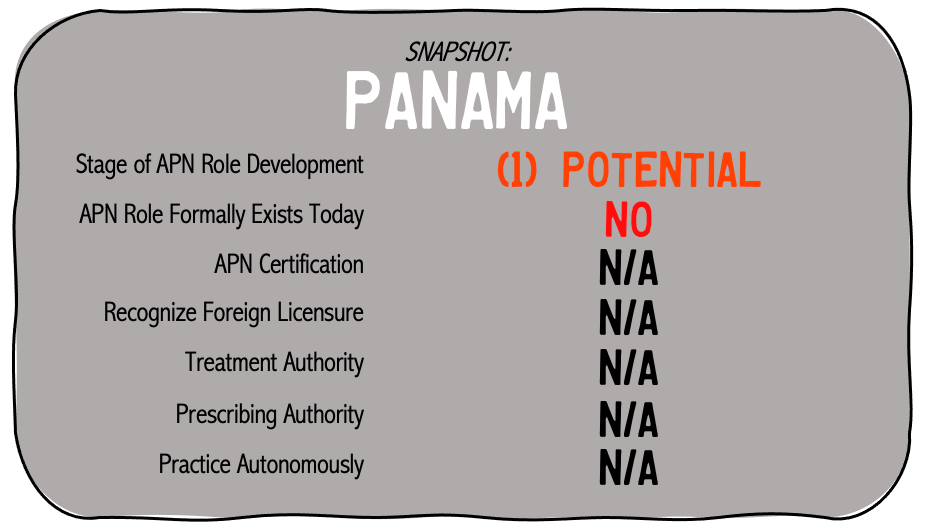
The role of Advanced Practice Nursing in Panama is not currently observed to be in development. There are several generalized contextual barriers (i.e. pushback from physician organizations, lack of nursing role standardization) in developing the role throughout Latin America and Panama is not and exception to that situation (Zug et al., 2016). In addition, there are barriers based on general availability of healthcare staff per 1000 population. Sheer and Wong (2008) pointed out the disparities of health professionals in Panama whereas the Advanced Practice Nurse role is typically facilitated when there is a greater proportion of nurses per 1000 population and a gap in physician availability (Sheer & Wong, 2008). The following table shows the basic comparisons of two nations with significant APN role advancement compared to Panama:

Sheer and Wong (2008) pointed out the disparities of health professionals in Panama whereas the Advanced Practice Nurse role is typically facilitated when there is a greater proportion of nurses per 1000 population and a gap in physician availability (Sheer & Wong, 2008). The following table shows the basic comparisons of two nations with significant APN role advancement compared to Panama:

[Table: World Bank website. Nurses & Midwives and Physicians per 1000 population]

Additionally, Panama is largely a proponent of supporting host country nationals for specific jobs including physicians and nurses, as a result foreign education is not transferrable unless you are formally a Panamanian citizen or you are formally married to one (Czark, B., n.d.).

Meanwhile, there are significant gaps in healthcare primarily outside of Panama City where the majority of medical providers reside and work. This leaves potential gaps that would be more ideal to allow nurse practice advancement. Currently, there are medical brigades (aka medical missions) permitted allowing healthcare providers from other nations to provide health services on a voluntary basis; such opportunities can be found online in abundance.

Have information to add to this page?

References:
Czark, B. (n.d.). 25 jobs forbidden to foreigners in Panama. Retrieved July 1, 2022 from: https://livinginpanama.com/panama/jobs-forbidden-foreigners/

Sheer, B. & Wong, F.K.Y. (2008).  The development of advanced nursing practice globally.  Journal of Nursing Scholarship, 40(3),204-211.

World Bank, The. Statistics: Nurses and midwives per 1000 population for Panama, Netherlands, and United States. Retrieved July 1, 2022 from: https://data.worldbank.org/indicator/SH.MED.PHYS.ZS?locations=PA-US-NL

World Bank, The. Statistics: Physicians per 1000 population for Panama, Netherlands, and United States. Retrieved July 1, 2022 from: https://data.worldbank.org/indicator/SH.MED.PHYS.ZS?locations=PA-US-NL

Zug, K.E., De Bortoli Cassiani, S.H., Pulcini, J., Bassalobre Garcia, A., Aguierre-Boza, F., & Park, J. (2016). Advanced practice nursing in Latin America and the Caribbean: Regulation education and practice. Revisita Latino-Americana de Enfermagem. 24(2016). doi:10.1590/1518-8345.1615.2807

Advanced Practice Nursing in the United Kingdom (England, Wales, Scotland, and Northern Ireland)

Screen Shot 2022-06-19 at 2.15.12 PM

Contact:
Nursing & Midwifery Council
Royal College of Nursing

Country Specific Resource Links:
Advanced Practice Toolkit – repository for UK specific resources for practice

Role

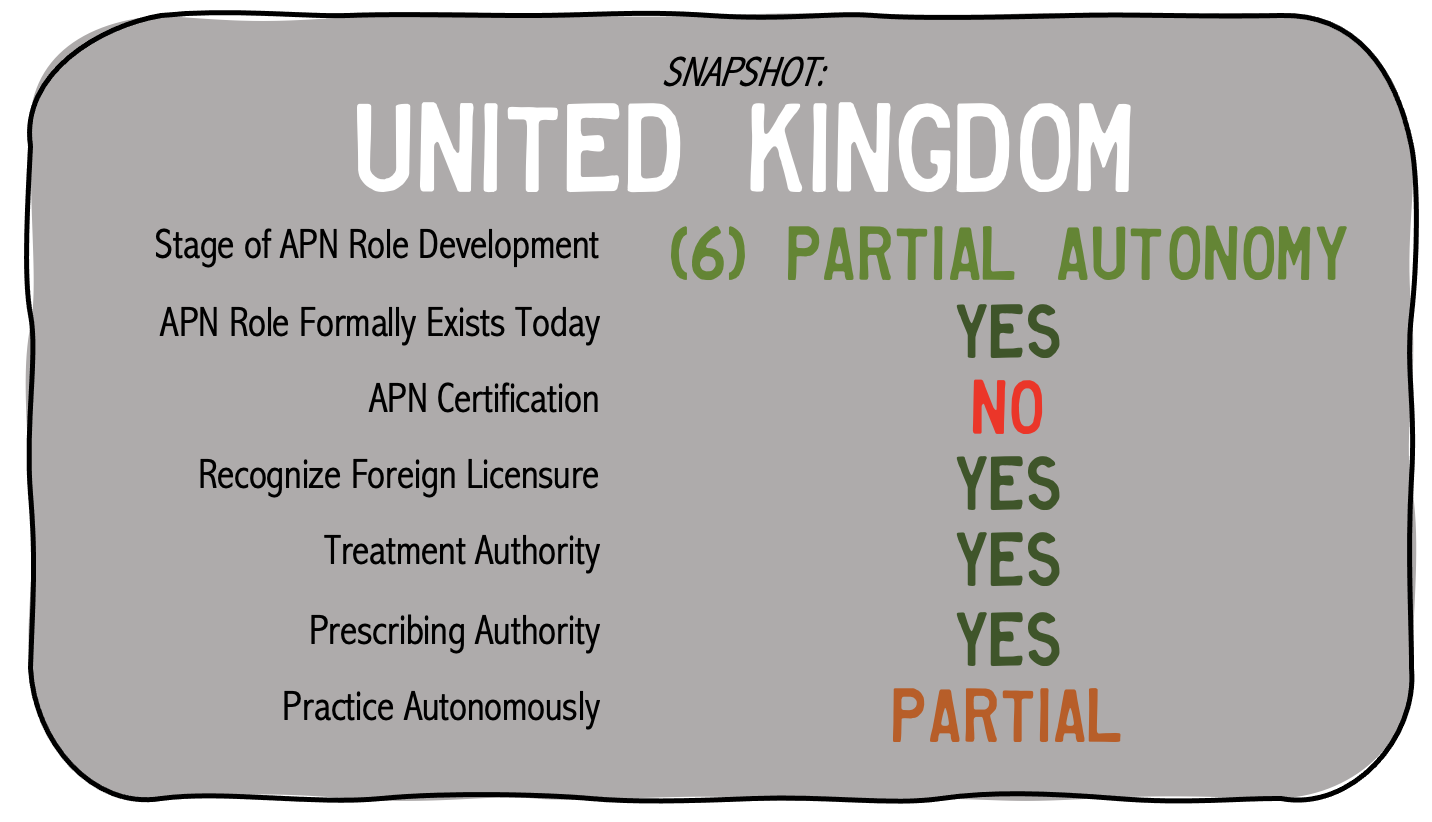
The role of Advanced Practice Nurses in the United Kingdom (UK) is primarily represented as Advanced Nurse Practitioners (ANPs; RCN, 2012).  While the title of ANP is used by the Royal College of Nursing (RCN), there had been inconsistencies among the general public as to the term to call ANPs in the country, and various are used as: advanced clinical practice (ACP) nurse, nurse practitioner, registered nurse practitioner, clinical nurse practitioner, senior nurse practitioner, advanced nurse practitioner, and association nurse practitioner (Morgan, 2010; RCGP, 2020).

The ANP role was first introduced in the UK with the initiation of a Nurse Practitioner program focusing on primary health care at the Royal College of Nursing (RCN) in 1991-1992 (NP/APN Network, 2020; Sheer & Wong, 2008).  Much of the push for development of this role was to ease the overbearing workload of the general practitioners (primary care physicians) in the country, and this largely continues to drive the need for this role (NP/APN Network, 2020; Pulcini, Jelic, Gul, & Loke, 2009).  Delamaire and Lafortune (2010), further identified that improving the quality of care additionally drives role development in the UK.

While the role has been continually developed and internationally is considered at a more advanced stage of APN advancement, the role is not formally regulated which greatly prevents further advancement and maintains inconsistencies in both educational and professional standards (Evans et al., 2020; NP/APN Network, 2020).

Currently ANPs in the UK have both prescriptive authority and work autonomously, two role qualities that have demonstrate significant advancement of the advanced practice nurse role (RCN, 2013; RCN, 2022).  Because of the origination in primary care, the ANP role in the UK is to perform the same care as a general practitioner (Morgan, 2010).  Additionally, the role has progressively been integrated and widely embraced in the UK health system (Evans et al., 2020).

Outside of the ANP role in the UK, there are various specializations offered for general nurses allowing them to become a level 2 nurse, which is a role that is registered by the Nursing and Midwifery Council in the UK (NMC, 2013).  While these roles do require additional education, they are not the same as the ANP role described above.

There is a role of the midwife in the UK regulated by the Nursing and Midwifery Board.  This role is unique in that all midwives have a supervisor midwife to provide a check in quality of care, reflecting a role and regulatory structure existing since 1902 (NMC, 2010).

Education and Certification

Education for the Advanced Nurse Practitioner in the UK has been occurring at the masters level for more than 20 years and the majority of ANPs in the UK possess a graduate degree (Delamaire & Lafortune, 2010; RCN, 2022; Savrin, 2009).   While the recommended standard for advanced nurse practitioners in the UK is set by the recommendations by the Royal College of Nursing, it is not required that all educational programs in the country follow these recommendations, and consequentially the role varies according to health institution’s policies (Evans et al., 2020; King, Tod, & Sanders, 2017; Morgan, 2010).

Registration as an Advanced Nurse Practitioner in the UK is required as a nurse, and there is not a separate registry outside of that of the general nursing registry (RCN, 2022b).  Licensure of nursing is accepted from other nations as an Advanced Nurse Practitioner, provided an individual can follow the required process to do so (RCN, 2022b).

To help with APN role standardization, as of 2017 the RCN proposed a national certification to provide regulation for the standard scope of practice.  While the momentum to provide such standardization has been growing over the years, inconsistency in advanced nursing education continues to beleaguer role continuity (Evans et al., 2020; King, Tod, & Sanders, 2017; NP/APN Network, 2020).

Specialties

The role of the ANP in the UK was greatly focused on primary health care (Pulcini et al., 2009).

For registered nurse specialists, there are currently various specialties that level 1 nurses can specialize in (RCN, 2013):

  • Registered specialist community public health nurse (SCPHN) qualification in
    • Family
    • Health visitor
    • Occupational health
    • Non-specific
    • School nurse
  • Specialist Practice Qualification
    • Adult nursing
    • Children’s nursing
    • Community children’s nursing
    • Mental health nursing
    • District nursing
    • General practice nursing
    • Learning disability nurse
    • Mental health

While these are the registration qualifications recognized by the NMC in the UK, nurses can have a specialization in a specific subject of nursing (i.e. epilepsy, Parkinson’s, cancer).

Have information to add to this page?

References:
Delamaire, M. & Lafortune, G. (2010). Nurses in advanced roles: A description and evaluation of experiences in 12 developed countries.  OECD Health Working Papers, 54, OECD Publishing.http://dx.doi.org/10.1787/5kmbrcfms5g7-en

Evans, C., Pearce, R., Greaves, S., & Blake, H. (2020). Advanced clinical practitioners in primary care in the UK: A qualitative study of workforce transformation.  International Journal of Environmental Research and Public Health. 17(4500), doi:103390/ijerph17124500

King, R., Tod, A., & Sanders, T. (2017). Development and regulation of advanced nurse practitioners in the UK and internationally. Nursing Standard, 32(14). pp.43-50.  doi: 10.7748/ns.2017.e10858

Morgan, S. (2010, July 9).  What are the differences in nurse practitioner training and scope of practice in the US and UK?  NursingTimes.net.  Retrieved from: http://www.nursingtimes.net/nursing-practice/clinical-zones/district-and-community-nursing/what-are-the-differences-in-nurse-practitioner-training-and-scope-of-practice-in-the-us-and-uk/5017012.article

NP / APN Network (2020). Guidelines on advanced practice nursing 2020 [online publication].   International Council of Nurses. Geneva, Switzerland.

Nursing and Midwifery Council [NMC] (n.d.).  Registering as a nurse or midwife in the United Kingdom: For applicants outside the European Economic Area [online document].  Retrieved from: http://www.nmc-uk.org/Documents/Registration/Registering%20as%20a%20nurse%20or%20midwife%20from%20outside%20EU%20or%20EEA.pdf

Pulcini, J., Jelic, M., Gul, R, Loke, A.Y. (2009).  An international survey on advanced practice nursing, education, practice, and regulation.  Journal of Nursing Scholarship, 42(1),31-39.  doi: 10.1111/j.1547-5069.2009.01322.x

Robinson, S. & Griffiths, P. (2007).  Nursing education and regulation: International profiles and perspectives [online publication].  Retrieved from:http://eprints.soton.ac.uk/348772/1/NurseEduProfiles.pdf

Royal College of General Practitioners [RCGP] (2020). Core capabilities framework for advanced clinical practice (nurses) working in general practice / primary care in England [online book]. Health Education England, NHS. England.

Royal College of Nursing [RCN] (2012).  Advanced nurse practitioners: An RCN guide to advanced nursing practice, advanced nurse practitioners and programme accreditation [electronic document].  Retrieved from: http://www.rcn.org.uk/__data/assets/pdf_file/0003/146478/003207.pdf

Royal College of Nursing [RCN] (2013).  RCN Factsheet: Specialist nursing in the UK.  Retrieved from: http://www.rcn.org.uk/__data/assets/pdf_file/0018/501921/4.13_RCN_Factsheet_on_Specialist_nursing_in_UK_-_2013.pdf

Royal College of Nursing [RCN] (2022a). Advanced practice standards. Retrieved June 19, 2022 from: https://www.rcn.org.uk/Professional-Development/Advanced-Practice-Standards

Royal College of Nursing [RCN] (2022b). Register as a nurse or midwife if you trained outside the UK. Retrieved June 19, 2022 from: https://www.nmc.org.uk/registration/joining-the-register/register-nurse-midwife/trained-outside-uk/

Savrin, C. (2009). Growth and development of the nurse practitioner role around the globe.  Journal of Pediatric Health Care 23, (5),310-314.

Sheer, B. (2007).  Nurse practitioners on the move: The journey to the United States.  Topics In Advanced Nursing eJournal. 7(2).  Retrieved from: http://www.medscape.com/viewarticle/560673

Sheer, B. & Wong, F.K. (2008).  The development of advanced nursing practice globally.  Journal of Nursing Scholarship, 40(3),204-211.

[Originally Published October 7, 2013. Updated June 19, 2022]

Advanced Practice Nursing in Latvia

Contact:
Latvian Nurses Association

Role

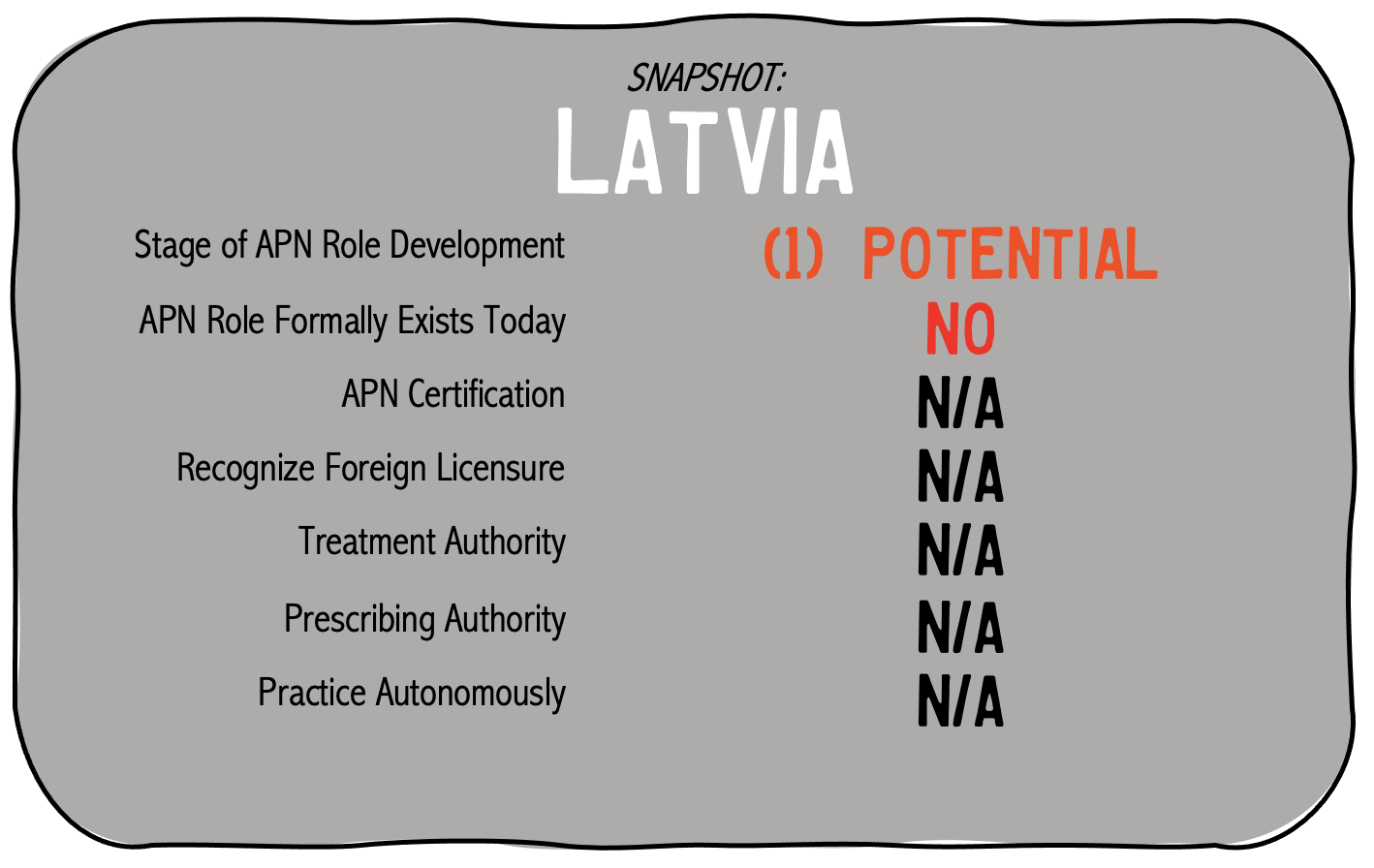
The role of Advanced Practice Nursing in Latvia is not currently observed to be in development. Most recently Latvia has prioritized standardization of their registered nursing curriculum, identifying that by the end of 2022 to have registered nurses trained at the bachelor’s level (WHO, 2020). Traditionally the health system has allowed for various nursing specialties, but did not have a general nurse role. The initiative ratified by the Latvian Parliament has undergone the establishment of a generalize nursing qualification, and then allow nurses to specialize further afterward (WHO, 2020).

Since the nation has yet to formally establish their nursing fundamental curriculum and qualifications, the advancement of the nursing role toward a master’s degree level and provision of an expounded scope of practice is not yet underway.

Meanwhile, there is a significant gap of healthcare workers throughout the nation, particularly for individuals to work in the traditional physician scope of practice as well in rural settings. Additionally, evaluation of burnout of the nursing force within Latvia has identified that nurses feel a significant gap in feeling empowered and accomplishment (Circenis et al., 2017). In theory, if nurses were given additional opportunities for professional growth and increased autonomy, they may have reduced burn out (Twigg, D. & McCullough, 2014). As a result Latvia does have several significant potential factors to promote the advancement of the nursing role.

Have information to add to this page?

References:
Circenis, K., Deklava, L., Millere, I. et al. (2017). Fatigue and burnout among Latvian nurses. Global Journal of Psychology Research New Trends and Issues. 7(3), 111-116. doi:10.18844/gjpr.v7i3.2856

Twigg, D. & McCullough, K. (2014). Nurse retention: A review of strategies to create and enhance positive practice environments in clinical settings. International Journal of Nursing Studies. 51(1). 85-92. doi:101016/j.ijnurstu.2013.05.015

Veide, S., Lember, M. & Põlluste, K. (2015). Latvia.  In Kringos, D.S., Boerma, W.G.W., Hutchinson, A. et al. (Eds.) Building primary care in a changing Europe: Case Studies [Internet].  European Observatory on Health Systems and Policies, Copenhagen, Denmark.

World Health Organization [WHO] (2020). Postgraduate training in Latvia. Retrieved from: https://apps.who.int/iris/bitstream/handle/10665/336238/WHO-EURO-2020-1304-41054-55734-eng.pdf?sequence=1&isAllowed=y

Advanced Practice Nursing in Norway

Contact:
Norwegian Nurses Organisation (NNO)
Western Norway University of Applied Sciences

Role

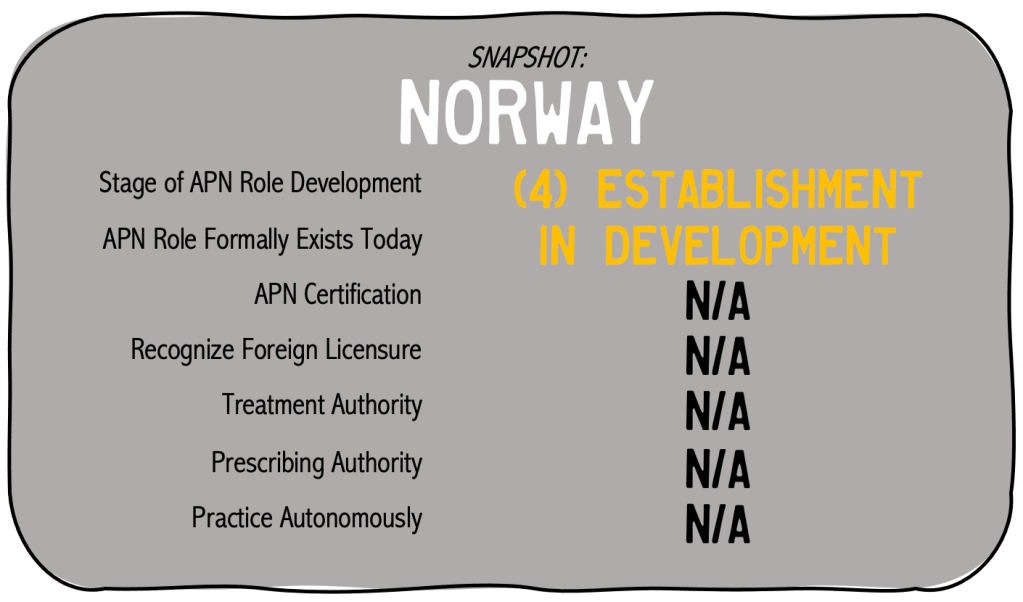
The role of Advanced Practice Nursing in Norway has most recently explored and is currently in active development.  According to Holm Hansen et al. (2020) the role was most recently introduced through an extended pilot including both the nurse practitioner and clinical nurse specialist roles (Holm Hansen et al., 2020).  Through this extensive introduction, key barriers to developing the role have been identified.  One of the biggest gaps at this time is the lack of formal role protection in the country (Østvik, 2017).

Education, Certification, and Specialties

Both the bachelor and master’s level educational programs for registered nurses are regulated, creating a solid foundation for the advancement of nursing practice (Holm Hansen et al., 2020).  Since the master’s level degree has been available for nurses since 2015 which allows advanced practice nursing to be able to more easily embrace the APN role (Østvik, 2017). With the piloted roles described by Holm Hansen et al. (2020), advanced practice nursing in Norway has core curriculum and training at the master’s level, with 120 credits for program completion (WNU, 2022).  However because of the lack of formal recognition of the APN role, the APN educational curriculum is not yet nationally regulated (Østvik, 2017)

Have information to add to this page?

References:
Holm Hansen, E., Boman, E., Bing-Jonsson, P., & Fagerstrom, L.M. (2020). Introducing nurse practitioners into Norwegian primary healthcare- Experiences and learning.  Research and Theory for Nursing Practice: An International Journal, 34(1) doi:10.1891/1541.6577.34.1.21

Østvik, E. (2017). Country Practice Profiles: Norway [Webpage]. NP / APN Network. Retrieved June 5, 2022 from: http://icn-apnetwork.org

Western Norway University of Applied Sciences [WNU] (2022). Advanced Practice Nursing. Website.  Retrieved June 4, 2022 from: https://www.hvl.no/en/studies-at-hvl/study-programmes/advanced-nursing-practice/.